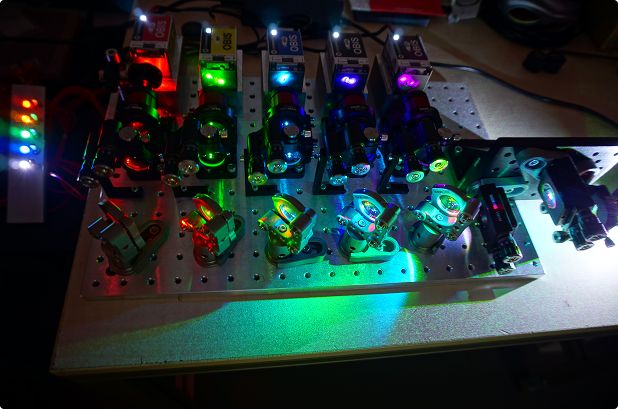
Laser beam combiners are devices that allow the outputs of several lasers to be freely combined into a single beam. These are usually lasers operating at different wavelengths, and the beam combiner is thus able to cover a wide part of the spectrum (typically in the visible range) within a single output. The ability to communicate with individual lasers and control them independently is maintained. Whether the target application requires continuous (CW) or modulated (pulsed) illumination (or a combination of both), the beam combiner allows for flexible selection.

Designed by OptiXs
Laser Beam Combiner
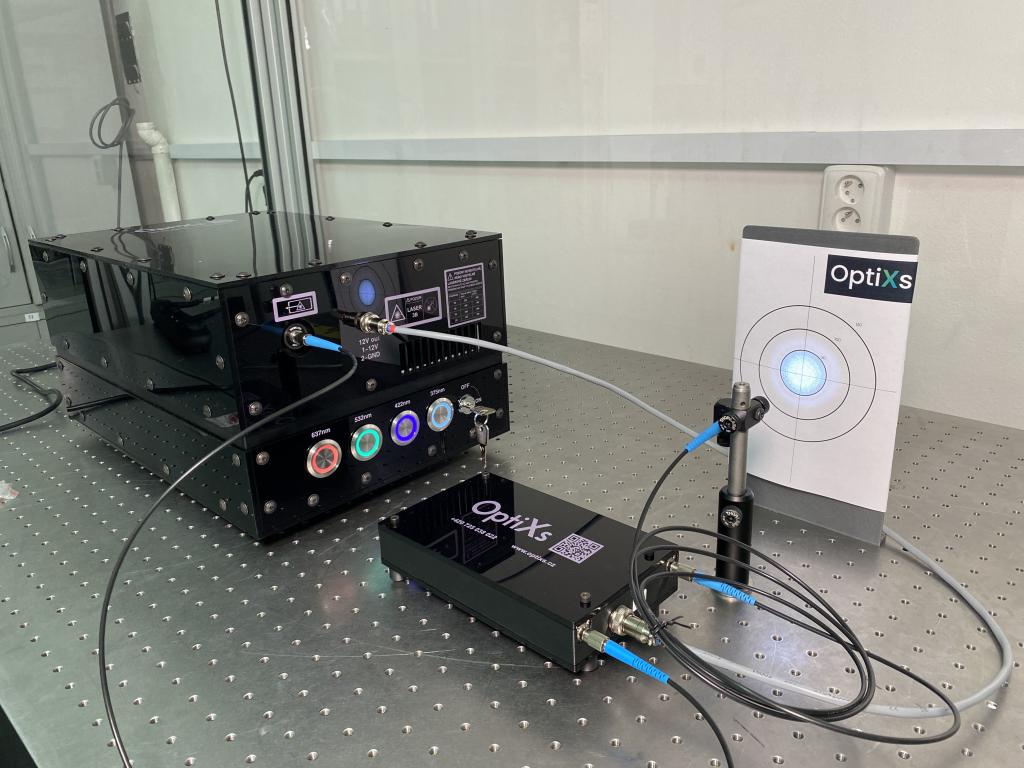
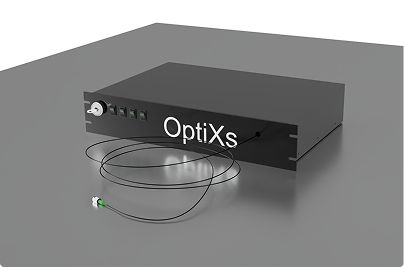
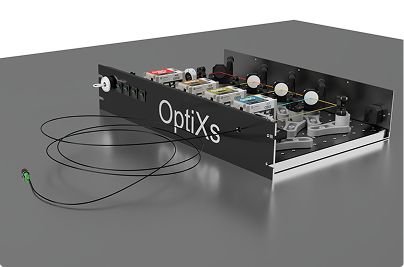
Laser beam combiners allow the outputs of several lasers to be combined into a single beam, even across different wavelengths. This provides broad spectral coverage while maintaining individual control of each laser. At OptiXs, we manufacture these modules to order – we adjust the power, output mode, control method, output type (free space or optical fiber), and physical design according to the selected lasers. Beam combiners are used, for example, in spectroscopy, microscopy, cytometry, and optogenetics.
Send inquiry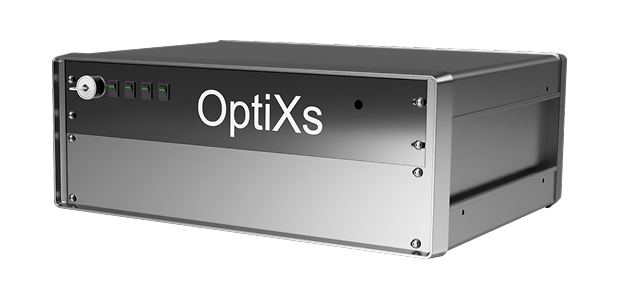
Custom-made product
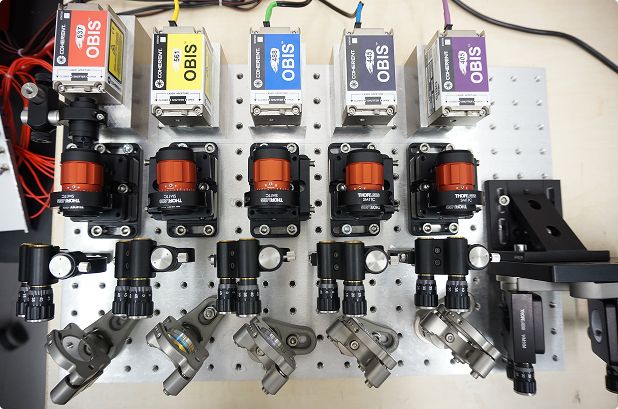
In OptiXs we make the beam combiner as a custom-made product, which allows us to incorporate any modifications into its design according to the customer's needs. In addition to the choice of lasers, a whole range of other parameters can be individually adjusted, such as the method of control (communication), the number and type of optical outputs, physical dimensions of the device, etc. Our approach also allows for the adjustment of the optical path of individual lasers (for example, for the purpose of inserting additional functional elements such as filters and modulators). Thanks to the individual approach, we are also able to adapt the design of the beam combiner so that it can be integrated into your existing device.
Are you interested in this product?
Contact our expert advisor or send your inquiry directly.
Send inquiry
Application areas

Spectroscopy
Optical spectroscopy is a branch of physics that studies the interaction of light with matter.
Flow cytometry
Flow cytometry is a modern analytical method that enables rapid and precise examination of individual cells in a flowing sample.
Microscopes
Microscopy is widely used across all fields of natural sciences. See examples of applications.
Configuration options
Number of Lasers
(or more in individual cases)
Laser Wavelength
(individually expandable beyond this
range)
Laser Power
(depending on selected wavelengths and
configuration)
Operating Mode
(can be selected for each laser
separately)
Control (Communication)
(other options in individual
cases)
Number of Optical Outputs
(or more in individual
cases)
Type of Optical Outputs
(adjustments to output beam
parameters are possible)
Mounting method
(other options in individual
cases)
Flexible control and combination of laser sources
Optical parameters and configuration
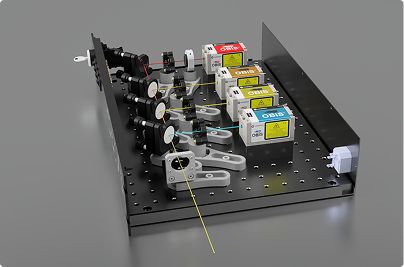
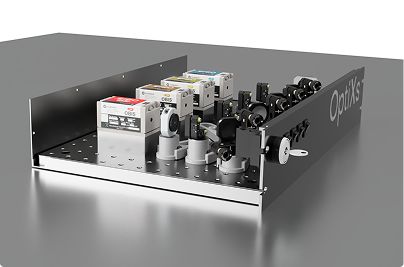
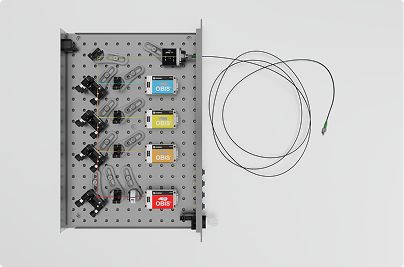
The optical parameters of the beam combiner depend primarily on the selected lasers. At OptiXs, we typically use OBIS continuous lasers from Coherent, but alternative solutions are also possible based on individual agreements. In addition to output power and wavelength, other output beam parameters such as spatial mode, polarization, width, and divergence also depend on the selection of lasers and their specific configuration. In addition to the standard "free space" beam, lasers can also be guided at the output into a common optical fiber, which in many applications significantly facilitates the delivery of lasers to their destination.
Reference projects
Technical University of Ostrava

Ústav organické chemie a biochemie AV ČR, v. v. i.

Biofyzikální ústav AV ČR

Ústav Molekulární Genetiky AV ČR v.v.i.

CEITEC
Visualization

Inquire product
Are you interested in product? Send us your requirements via the enquiry form or contact an expert consultant directly. We will be happy to answer your questions and propose a solution according to your needs.

