| Delay lines | |||||||
|---|---|---|---|---|---|---|---|
| Operating wavelength [nm] | 1060 | 1550 | 2000 | ||||
| Optical delay range [ps] | 330 | 660 | 330 | 660 | 330 | 660 | |
| Typical insertion loss [dB] | 1.4 | 1.7 | 1.4 | 1.7 | 2.5 | 2.5 | |
| Insertion loss uniformity [dB] | 0.25 | 0.35 | 0.25 | 0.35 | 0.2 | 0.2 | |
| Optical delay resolution [fs] | < 0.33 | ||||||
| Polarization extinction ratio [dB] | > 20 | ||||||
| Fiber type | PM-980-XP / 1060-XP | PM-1550 / SM-1550 | PM-1950 / SM-1950 | ||||
| Fiber connectors | FC/APC, FC/PC | ||||||
| Dimensions (delay line) [mm] | 76.4 x 106 x 231.5 / 76.4 x 106 x 286.5 | ||||||

Designed by OptiXs
FODL-SA
Fiber delay line with optical delay range up to 660 ps and resolution < 0.33 fs. Controller with display and USB connection for remote control. Ideal for OCT, TDM, research and industrial applications.
Send inquiry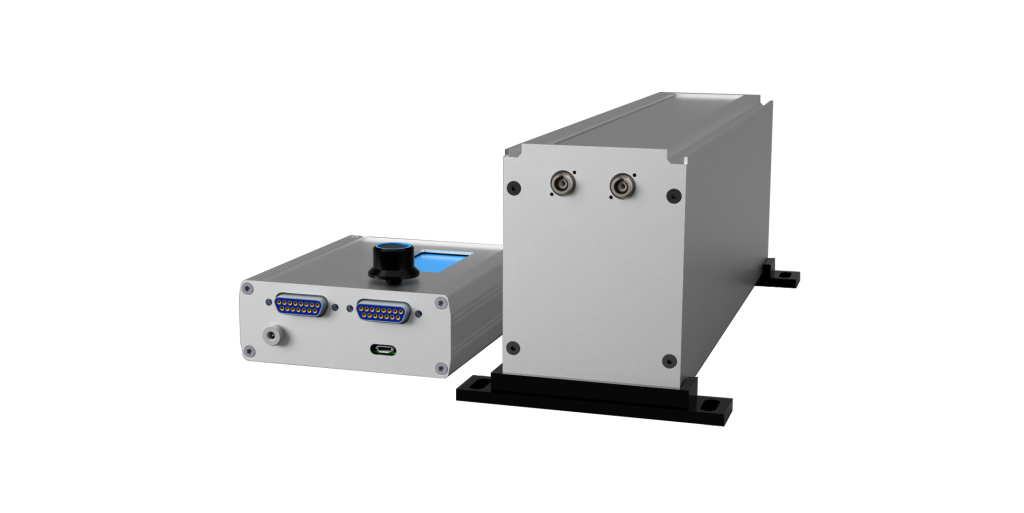
Key features
State-of-the-art optical performance
Our delay line offers an optical delay range of 330 ps or 660 ps with an unprecedented resolution of < 0.33 fs across the whole range. Low insertion loss is maintained even at 2 um wavelength.
Fiber and connector selection
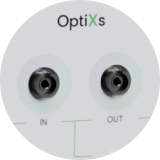
FC/APC and FC/PC standard is used for fiber connections. Both polarization maintaining (PM) and single mode (SM) fibers are available.
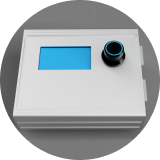
Controller with display and control knob + USB connection
Apart from direct control (manual knob + display), the USB connection allows remote operation of the device and automatization. Up to 2 delay lines can be driven by a single controller.
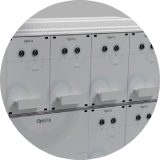
Compatibility with FODL‑MDX
The construction of FODL-SA is made compatible with our modular rack system for delay lines (FODL-MDX). With only minor modifications the stand-alone unit can be fully converted into a functional rack insert.
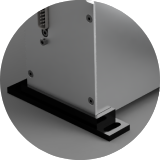
Support legs for mounting
The delay line is supplied with practical support legs that enable non-deformative mounting of the delay line on standard optical tables and breadboards.
Properties FODL-SA
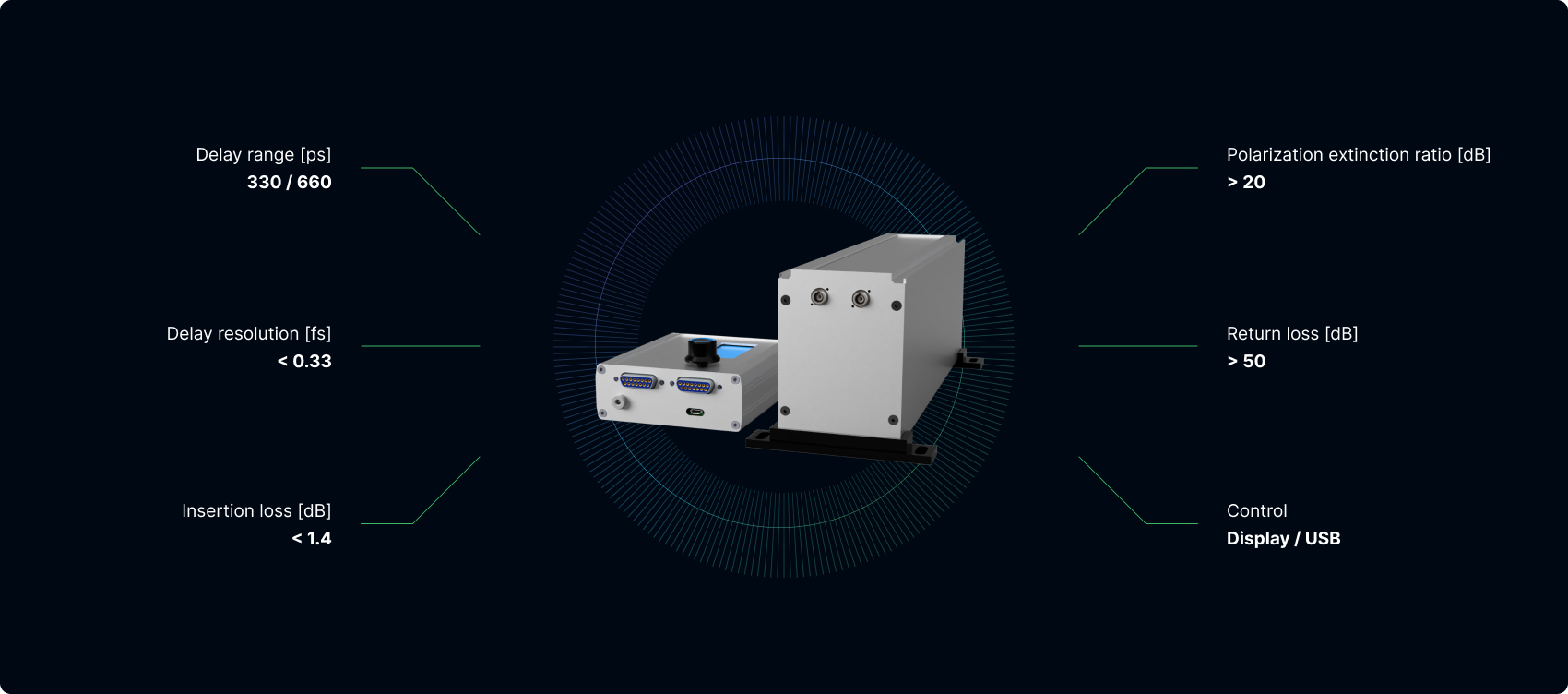

Variants
Any combination of the parameters can be chosen.
Operating wavelength
Optical delay range
Fiber type
Fiber connectors
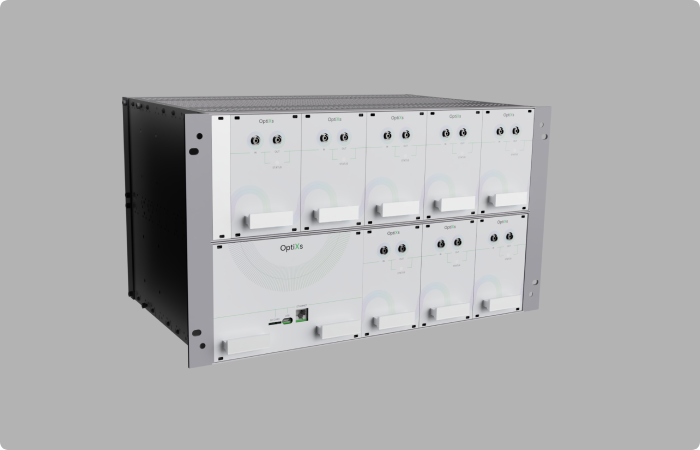
FODL available also as modular rack version (FODL‑MDX)
FODL MDX is a modular rack system for fiber delay lines. It is a plug-and-play solution for applications requiring the use of multiple delay lines in a single setup.
Go to the MDX versionSpecifications
| Controller | |||||
|---|---|---|---|---|---|
| Dimensions (controller) [mm] | 105.4 x 54 x 128 | ||||
| Operating temperature [°C] | 10 - 40 | ||||
| Power requirements | 12/24V, 1.5 A | ||||
| Control | direct via controller knob, remote via USB | ||||
Product description
We introduce a new product made by OptiXs – a Fiber Optic Delay Line. This device is designed to allow a precise variation of the optical path length which is widely used in many application areas such as interferometry, signal processing, telecommunications, etc.
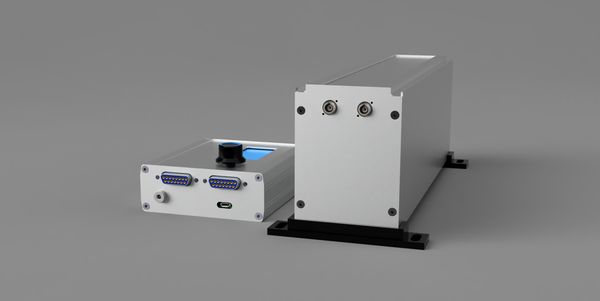
Depending on the selected type, our delay line offers an optical delay range of 330 ps or 660 ps with an unprecedented resolution of < 0.33 fs across the whole range. Low insertion loss ( < 1.4 dB*) and high insertion loss uniformity (0.25 dB) are maintained. You can choose between operating wavelengths of 1060 nm, 1550 nm and 2000 nm. In either case polarization-maintaining (PM) fibers with FC/APC connectors placed on the front face of the case are used by default. Single mode (SM) fibers and FC/PC connectors are also available.
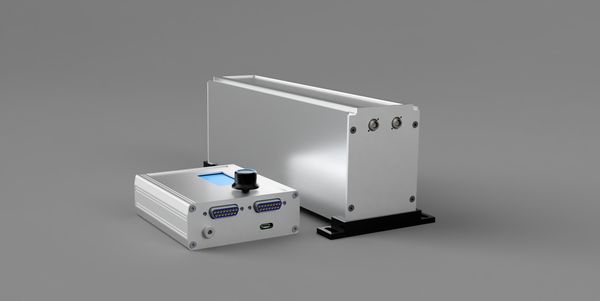
The delay line comes with a high-resolution stepper motor and a separate controller which enables both direct (manual knob + display) and remote (USB connection) operation of the device. Up to 2 delay lines can be driven by the same controller.
The stand-alone version is supplied with practical support legs that enable non-deformative mounting of the delay line on standard optical tables and breadboards. The stand-alone unit is also made compatible with our modular rack system (FODL-MDX) - contact us for more information. The versatility together with state-of-the-art optical performance makes our delay line ideal for advanced applications in optical coherence tomography (OCT), time division multiplexing (TDM), and many other industrial and research applications.
* For a version of delay line operating at 1550 nm with delay range 330 ps, see specs table for more details.
Gallery


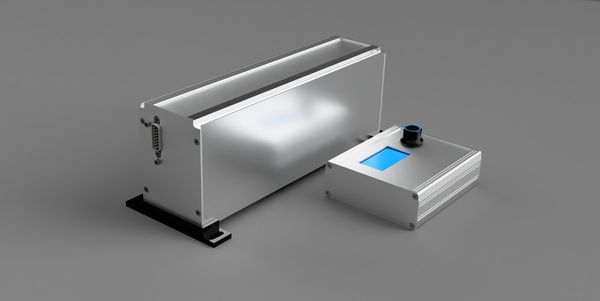
Sample visualizations
Applications
Optical coherence tomography (OCT)
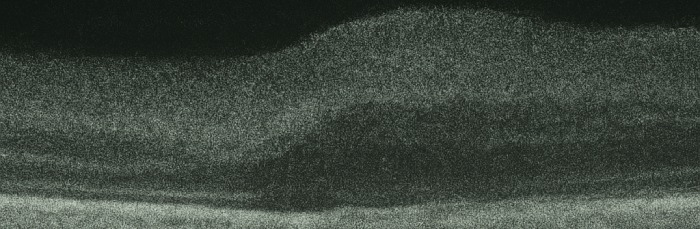
Optical coherence tomography is a powerful imaging technique used to obtain micrometer-scale, cross-sectional images of biological tissues and other scattering media. By using short-coherence-length light sources OCT can discern optical reflections from various depths in the sample. In medical contexts—especially ophthalmology, cardiology, and dermatology—OCT has transformed both diagnostic and therapeutic procedures through its high-resolution, noninvasive imaging capabilities.
At the heart of any OCT system is an interferometric setup, typically a Michelson interferometer with a reference arm and a sample arm. To reconstruct depth profiles (A-scans) at micrometer resolution, the optical path length in the reference arm must be finely tuned to match different layers within the sample. Fiber optic delay lines provide this precise control allowing one to scan through various depths within the tissue, enabling 2D or even 3D imaging.

Time division multiplexing (TDM)
Time division multiplexing (or more specifically optical time division multiplexing OTDM) enables multiple data channels to share a single communication path (optical fiber in case of ODTM) by interleaving their pulsed signals in time. This technique is used to increase the overall data transmission capacity. After being transmitted together, the signals are separated at the end of the optical path based on different times of arrival. This is where fiber optic delay lines come into play. By enabling precise, stable temporal alignment of ultrashort pulses, fiber optic delay lines are indispensable components in modern OTDM setups. They help maximize data throughput, maintain signal quality, and ensure reliable, high-speed optical communication.
Research applications
In cutting-edge research labs, optical delay lines serve as valuable tools for fine-tuning light signals with extreme precision—often down to sub-femtosecond levels. By enabling minute adjustments of path length, they help researchers perform highly sensitive interferometric measurements, synchronize ultrafast laser pulses, and explore new frontiers in spectroscopy. The result is enhanced experimental control, improved data accuracy, and the ability to unlock groundbreaking discoveries in fields spanning from fundamental physics to high-speed communication technologies.
Consultation
Interested in a consultation?
Contact us, we will be happy to discuss everything with you.


Developed in collaboration with the HiLASE
Inquire product
Are you interested in product? Send us your requirements via the enquiry form or contact an expert consultant directly. We will be happy to answer your questions and propose a solution according to your needs.